Integrating the Hair Comb Line Gradient Icon into Your Professional Workflow
In the fast-paced world of digital design and content creation, efficiency is not just a benefit; it is a requirement. Whether you are a freelancer managing multiple client accounts, a product designer building a mobile application, or a small business owner refining your brand identity, the assets you choose significantly impact your production timeline. The Hair Comb Line Gradient Icon represents a specific category of design asset that bridges the gap between aesthetic appeal and functional versatility. Understanding how to integrate this resource effectively requires a look beyond the visual and into the mechanics of your daily workflow.
Understanding the Asset: Beyond the Visual
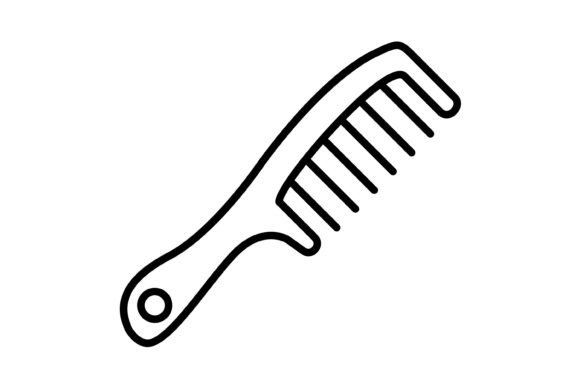
At its core, the Hair Comb Line Gradient Icon is a vector-based graphic designed to represent styling, grooming, or detailed organization within a user interface or print layout. However, its value lies in its technical construction. This icon set is not merely a collection of images; it is a toolkit engineered for compatibility. The inclusion of AI, EPS, JPG, PNG, and SVG formats means the asset is prepared for nearly any environment you might encounter. For the professional, this eliminates the "conversion bottleneck"—the time lost trying to turn a raster image into a scalable vector or vice versa.
The "line gradient" style is particularly relevant in modern UI/UX trends. It offers a softer, more dynamic look than flat icons, providing depth without the heaviness of solid fills. When you are planning a project, such as a beauty industry app or a lifestyle blog template, selecting this specific icon style early in the design phase helps set the tone for the entire visual language. It interacts with your typography and color palette, requiring a cohesive approach from the outset.
Preparation and Compatibility in Real-World Scenarios
Before you even place the icon into your project file, the preparation phase is critical. The asset comes in a zip file containing five distinct formats. A common workflow error is extracting all files into a chaotic desktop folder. Instead, consider integrating this icon pack into your established asset management system.
For a developer or designer, the SVG (Scalable Vector Graphics) and PNG (Portable Network Graphics) files are the primary drivers. The SVG format is essential for web development, as it ensures the Hair Comb icon scales perfectly on high-resolution retina displays without pixelation. It also keeps file sizes low, which is crucial for website load times and SEO performance. Meanwhile, the PNG format, noted for its transparent background, is indispensable when overlaying the icon onto complex backgrounds or photography in marketing materials.
If you are working within the Adobe ecosystem, the AI and EPS files allow for direct manipulation. This is where the "easy to edit" feature comes into play. You can adjust the gradient stops to match a client’s specific hex codes, ensuring brand consistency. This level of customization is vital during the quality control phase of a project, where generic assets often fail to meet specific brand guidelines.
Workflow Integration: Mobile and Web Development
For mobile app developers, the Hair Comb Line Gradient Icon serves a functional role in navigation and feature highlighting. Because the icon is designed for maximum usability, it adheres to standard sizing conventions that make it legible on small screens. When integrating this into a mobile interface, the process typically involves importing the SVG into tools like Figma, Sketch, or Adobe XD. You would use the icon to denote a "style" or "settings" feature, ensuring that the touch target is large enough for user interaction.
In web design, the implementation often involves CSS management. The vector nature of the asset allows you to change its color via code, though the gradient effect may require maintaining the original file integrity. A practical tip for web developers is to use the transparent PNG for quick placements during the prototyping phase, then swap to the optimized SVG for the final production build to ensure faster page speeds.
Practical Application in Marketing and Content Creation
For marketers, bloggers, and content creators, the utility of the Hair Comb Line Gradient Icon extends into visual storytelling. In a blog post discussing personal care, wellness routines, or even "untangling" complex business problems (a metaphorical use), the icon serves as a visual anchor. It breaks up text-heavy sections, improving readability and keeping the audience engaged.
Consider the process of creating a presentation or an educational template. A cluttered slide deck loses the audience's attention. By using a consistent set of line gradient icons, such as this comb set, you create a visual rhythm. The workflow here involves pre-selecting your assets before building the slide master. By placing the icons into your template library, you ensure that every slide maintains a professional, cohesive look without needing to hunt for images later.
Organization and Long-Term Efficiency
The true test of a design asset is its long-term use. A set of 100 vector icons offers significant value, but only if organized correctly. A productivity-minded approach suggests creating a dedicated folder structure for "UI Assets" categorized by type (e.g., "Grooming," "Navigation," "Social").
When you download the zip file, take a moment to rename the files according to your naming convention (e.g., "icon-comb-gradient-blue.svg"). This small step in the preparation process saves minutes per project, which adds up to hours over the course of a year. It also ensures that if you delegate tasks to a virtual assistant or a junior designer, they can locate and use the asset without confusion.
Conclusion: Elevating the Standard Workflow
The Hair Comb Line Gradient Icon is more than a decorative element; it is a functional component of a broader creative ecosystem. By utilizing the full range of included formats—AI, EPS, JPG, PNG, and SVG—you equip yourself to handle any platform, from mobile interfaces to high-quality print. The key to successful implementation lies in preparation, proper file management, and a clear understanding of how the asset interacts with your specific project goals. When integrated correctly, this icon set streamlines the design process, allowing you to focus on strategy and execution rather than technical hurdles.