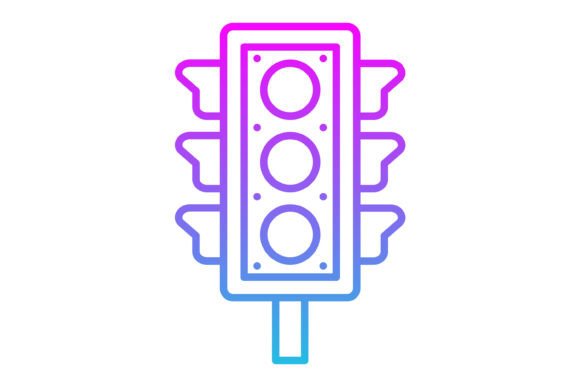
Traffic Light Line Gradient Icon: A Guide for Every Creator
In the digital landscape, visual cues are the shorthand for user experience. A well-placed icon can guide a user’s eye, simplify complex navigation, or instantly communicate a status without a single word of text. Among these visual tools, the Traffic Light Line Gradient Icon stands out as a versatile and universally understood symbol. While we typically associate traffic lights with driving, in UI/UX design and presentation, they represent decision points, status updates, and hierarchy. Whether you are building a mobile application, drafting a corporate presentation, or designing a safety manual, having a high-quality, scalable version of this icon is essential for professional communication.
Understanding the Design and Versatility
The concept of a line gradient icon suggests a modern, clean aesthetic. Unlike flat, solid blocks of color, a gradient adds depth and texture, making the icon feel more polished and contemporary. This specific design approach ensures the icon fits seamlessly into modern "flat design" or "neumorphism" trends while retaining the classic recognition of the red, yellow, and green signals. For a designer, this balance is crucial. You want an icon that feels fresh and updated, but you cannot afford to sacrifice immediate recognition. Users need to know instantly that "green" means go, proceed, or success, and "red" means stop, error, or high priority.
When you download a resource like this, the value often lies in the file formats included. A professional asset package typically includes AI (Adobe Illustrator) and EPS files for vector editing. These are the master files. If you need to change the thickness of the lines, alter the gradient colors to match a specific brand palette, or resize the icon for a billboard without pixelation, these vector formats are non-negotiable. They offer the ultimate control for experienced designers.
However, the utility of the Traffic Light Line Gradient Icon extends far beyond the desktop of a vector artist. The inclusion of JPG, PNG (with transparent background), and SVG formats makes this asset accessible to almost everyone. The PNG format is particularly vital for web designers and content creators who need to overlay the icon onto different backgrounds—such as a blog post header or a video thumbnail—without the awkward white box surrounding it. Meanwhile, the SVG format is the gold standard for web developers because it is lightweight and scales perfectly on high-resolution retina screens, ensuring your website loads fast and looks sharp on mobile devices.
Practical Applications for Diverse Audiences
The beauty of a standardized symbol like a traffic light is that its meaning shifts based on the context of the viewer. Let’s explore how different professionals and hobbyists might leverage this specific icon set.
For Mobile and Web Developers
If you are developing an app or a website, consistency and performance are your top priorities. You are likely looking for icons that are "ready to use" to speed up your workflow. A Traffic Light Line Gradient Icon is perfect for status dashboards. Imagine a project management tool where tasks are flagged; using this icon allows users to quickly scan their to-do list and identify bottlenecks (red) versus completed items (green). For developers, the SVG format is a game-changer. It keeps the code clean and the load times low, which directly impacts SEO rankings and user retention. You aren't just adding a picture; you are integrating a functional UI element that enhances usability.
For Marketers and Bloggers
Content creators often struggle to find visuals that are both legally safe to use and high quality. Using a traffic light metaphor in a blog post about "The Green Light to Start Your Business" or "Red Flags in Email Marketing" is a powerful storytelling device. A blogger can use the transparent PNG to create custom featured images that stand out in social media feeds. The gradient effect adds a professional sheen that generic clip-art lacks, helping to establish the creator's brand as credible and polished. It’s a subtle detail, but readers associate visual quality with content authority.
For Educators and Presenters
For an educator, clarity is paramount. Whether teaching a coding class, a safety seminar, or a business strategy course, visual aids help students retain information. A traffic light icon is an excellent metaphor for "Risk Assessment." In a PowerPoint or Keynote presentation, using a large, crisp vector icon can help structure a lecture. You might use the red light to discuss "What to Avoid," the yellow for "Caution/Considerations," and the green for "Best Practices." Because the icon is designed for maximum usability and scalability, an educator can blow it up to fill a projection screen without it looking blurry or unprofessional.
For Small Business Owners and Entrepreneurs
Small business owners often wear many hats, including that of the graphic designer. They may not have the time to learn complex software like Illustrator. For them, the priority is speed and ease of use. Having access to pre-made formats like JPG and PNG allows them to quickly drag and drop these icons into internal documents, employee handbooks, or simple flyers. It helps them communicate operational status—perhaps in an inventory list or a sales pipeline visual—without needing to hire a professional designer for every small task. It democratizes design, allowing the business owner to focus on the message rather than the mechanics of creation.
Evaluating Quality and Usability
When selecting a Traffic Light Line Gradient Icon for your toolkit, it is helpful to evaluate it against a few key criteria, regardless of your skill level.
- Scalability: Does the icon retain its integrity when resized? This is where vector formats (AI, EPS, SVG) prove their worth. An icon that breaks when enlarged is useless for print materials like posters or T-shirts.
- Editability: Can you change the colors easily? While the classic traffic light colors are standard, brand guidelines often require specific hex codes. A good vector file allows you to ungroup the elements and apply your own gradient styles.
- Format Variety: Does the zip file include formats for different environments? You need SVG for the web, EPS for print, and PNG for social media. A comprehensive package saves you the headache of converting files yourself.
- Aesthetic Consistency: If this icon is part of a larger set of 100 icons, do they all share the same line weight and style? Using a mismatched icon in a UI set looks amateurish.
Matching the Icon to Your Goals
Ultimately, the decision to use a Traffic Light Line Gradient Icon depends on what you are trying to communicate. If you are building a complex enterprise software, you will prioritize the SVG and AI files for integration into your codebase and design system. If you are a hobbyist creating a digital planner or a scrapbook page, the transparent PNG offers the creative freedom you need without technical overhead.
This icon represents more than just a signal; it represents a system of organization. It helps bring order to chaos, whether that is traffic on a road, data in a spreadsheet, or ideas in a presentation. By choosing a high-quality set that includes the necessary file formats, you are equipping yourself with a tool that is flexible enough to grow with your projects. It ensures that whether you are communicating on a mobile screen or a printed page, your message is clear, professional, and visually engaging.