Understanding the T-Shirt Outline Icon: A Practical Guide to Formats and Application
The Anatomy of a Versatile Digital Asset
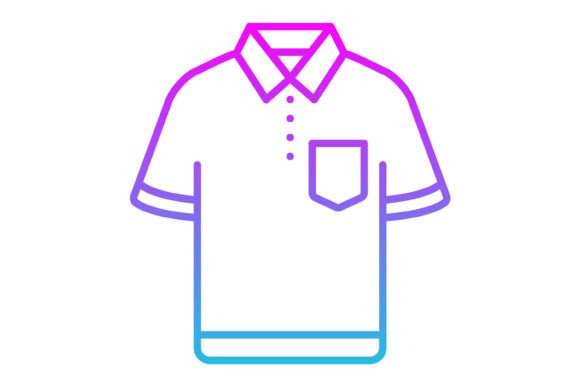
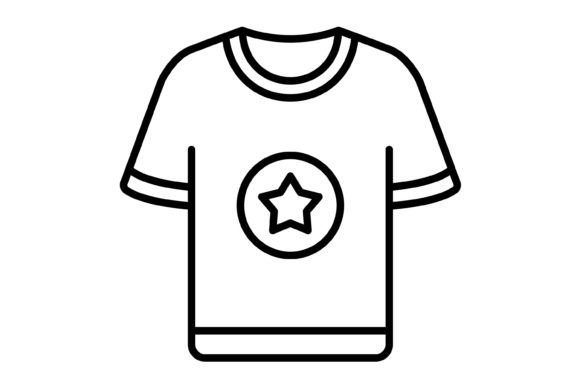
In the landscape of digital design, the icon set serves as a fundamental building block for user interface and visual communication. A specific asset, such as the T-Shirt Outline Icon, represents more than just a graphical element; it is a specialized resource designed for specific functionality. This icon collection is defined by its line-art style, offering a minimalist aesthetic that avoids the visual weight of filled or three-dimensional graphics. The primary value of this collection lies in its comprehensive nature, providing 100 vector icons dedicated to a single category, ensuring that professionals have a nuanced variety of visual representations for apparel-related concepts.
The defining characteristic of this set is the outline methodology. Unlike solid icons, which can sometimes dominate a layout or clash with busy backgrounds, line icons offer a lighter touch. They are designed for maximum usability, allowing them to function effectively as navigation elements in mobile apps, interactive buttons on websites, or illustrative accents in presentations. The visual consistency across the set ensures that when a designer selects different variations of the t-shirt—perhaps one showing a collar detail or another depicting a sleeve—they maintain a cohesive visual language throughout their project.
Analyzing the File Formats: AI, EPS, JPG, PNG, and SVG
A critical aspect of evaluating any icon resource is the versatility of its delivery formats. The inclusion of five distinct file types—AI, EPS, JPG, PNG, and SVG—signals a resource intended for broad compatibility across different software environments and project requirements. Understanding the specific utility of each format helps in determining if this asset fits a designer's existing workflow.
- AI (Adobe Illustrator): This is the native file format for the industry-standard vector graphics editor. For designers who need to modify the path points, change stroke weights, or alter colors at a granular level, the AI format is essential. It allows for full editability, making the icons easy to edit and scale without quality loss.
- EPS (Encapsulated PostScript): While less common in modern web workflows, EPS remains a vital format for print production and compatibility with older vector software or page layout programs. It ensures that the T-Shirt Outline Icon can be integrated into high-resolution print templates and brochures.
- SVG (Scalable Vector Graphics): For digital platforms, particularly web and mobile, SVG is the superior format. It is lightweight, scales perfectly to any screen resolution, and can be manipulated via CSS or JavaScript. This makes it suitable for mobile apps and responsive websites where performance and sharpness are priorities.
- PNG (Portable Network Graphics) with Transparent Background: This raster format is crucial for users who may not have access to vector editing software. The transparent background allows the icon to be placed over any color or image without a white box surrounding it. It is the standard for quick implementation in presentations or document editing software.
- JPG (Joint Photographic Experts Group): While JPG does not support transparency, it is included for contexts where file size is a constraint or where the icon will be placed on a known, static background. It is useful for quick previews or email attachments.
The inclusion of these formats covers the spectrum from high-end professional vector editing to quick-and-dirty raster implementation. For a user comparing options, the presence of SVG and AI files indicates a professional-grade resource, whereas a set offering only PNGs might limit scalability.
Contextualizing the Icon: Use Cases and Platform Suitability
The utility of a T-Shirt Outline Icon extends across various industries, but its effectiveness depends heavily on the context of use. The asset is marketed as being ready to use for all devices and platforms, a claim that rests on the vector-first approach of the collection.
Web and Mobile Interface Design
In the realm of UI/UX design, consistency is paramount. When building an e-commerce application or a fashion blog, the navigation elements must be uniform. The outline style of these icons is particularly effective in mobile apps where screen real estate is limited. Outline icons tend to feel less intrusive than solid icons, allowing the content to breathe. Furthermore, because they are vector icons, they render crisply on high-DPI (Retina) displays, preventing the blurriness often associated with raster graphics on modern smartphones.
Print and Presentation
For professionals creating presentations or templates, the ability to scale an icon without pixelation is non-negotiable. A presenter might need to enlarge a t-shirt icon to fill a slide background or shrink it to fit a data chart. The EPS and AI formats ensure that the lines remain sharp regardless of size. In print, particularly for catalogues or flyers, the outline style pairs well with typography, creating a clean, modern look that does not overwhelm the text.
Comparing Outline Icons with Alternatives
When evaluating the T-Shirt Outline Icon, it is helpful to consider how it compares to other visual styles and approaches. The choice between outline, solid, flat, or illustrative icons is not merely aesthetic; it involves functional tradeoffs.
- Outline vs. Solid Icons: Solid icons generally offer better visibility at very small sizes (below 16px) because the fill makes the shape more recognizable. However, at standard UI sizes (24px to 48px), outline icons provide a more sophisticated and airy feel. If the design goal is a "heavy" or "bold" aesthetic, solid icons might be preferable. If the goal is elegance and minimalism, the outline style is superior.
- Dedicated Sets vs. General Libraries: General icon libraries (like FontAwesome or Material Icons) often include a generic t-shirt icon, but rarely offer 100 variations. A dedicated set provides depth—perhaps variations for different sleeve lengths, necklines, or contextual uses (like a "hanger" or "washing" symbol). This specificity is a major advantage for niche projects, such as a laundry service app or a custom printing business.
- Custom Illustrations vs. Standardized Icons: Custom illustrations offer unique branding but are expensive and time-consuming to produce. Standardized icon sets offer a balance of quality and cost. The tradeoff is uniqueness; a widely distributed icon set may be used by competitors. However, because these icons are easy to edit, a designer can modify the stroke color or combine elements to create a semi-custom look.
Decision Factors: When to Choose This Resource
Determining if the T-Shirt Outline Icon is the right choice involves assessing the specific needs of the project against the features offered.
This resource is likely a strong fit if:
- The project requires a high volume of specific apparel variations (e.g., 50+ different shirt styles).
- The target platform is responsive web or mobile, where SVG support and scalability are critical.
- The design language of the project is minimalist, flat, or line-based.
- The user has access to vector software (like Illustrator) and intends to customize the colors or stroke weights to match brand guidelines.
- The project involves templates that will be reused, requiring assets that are robust and adaptable.
Alternative options might be better if:
- The project is a one-off social media post where a single, highly stylized illustration is needed rather than a consistent set.
- The user lacks the technical skills to utilize vector formats and only needs a single static image for a blog post (in which case a free stock photo or a single PNG might suffice).
- The design system requires filled, heavy icons to match an existing bold aesthetic.
Practical Application and Usability
The claim that the icons are designed for maximum usability suggests attention to technical details such as pixel-perfect alignment and consistent stroke widths. In professional icon design, a "pixel-perfect" grid ensures that vertical and horizontal lines align with the pixel grid of a screen, preventing anti-aliasing blur.
For a developer or designer integrating these icons, the workflow typically involves importing the SVG into a code editor or design tool like Figma or Sketch. Because the files are vectors, they can be converted into icon fonts or used as inline SVG code, allowing for dynamic color changes via CSS. This level of integration is impossible with raster formats like JPG or PNG, highlighting the value of the included vector files.
Ultimately, the T-Shirt Outline Icon set positions itself as a utility-first resource. It is not designed to be a piece of art that stands alone, but rather a functional tool to enhance user interfaces, streamline design workflows, and ensure visual consistency across a variety of media. By providing the source files (AI, EPS) alongside web-ready formats (SVG, PNG), it bridges the gap between the design phase and the development phase, catering to the full lifecycle of a digital product.