Understanding the Blood Bag Glyph Icon for Practical Design Workflows
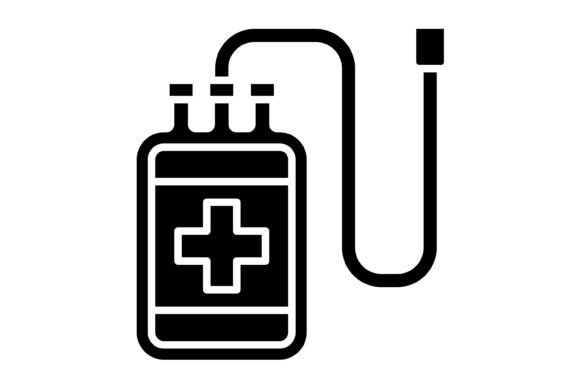
In the world of digital and print design, a well-chosen icon can do more than just decorate a space; it can clarify a message, guide a user, and streamline communication. The Blood Bag Glyph Icon is a prime example of a specialized asset that, when integrated correctly, adds significant value to projects in healthcare, emergency services, education, and related fields. This icon, representing a fundamental component of medical logistics, serves as a visual shorthand for concepts like donation, transfusion, storage, and life-saving procedures.
The true utility of this asset is unlocked not by simply having it, but by understanding its role within a broader creative or operational process. It is a tool designed for a specific purpose, and its effectiveness hinges on thoughtful implementation. This article explores how to leverage the Blood Bag Glyph Icon effectively, from initial planning to final deployment, ensuring it enhances clarity and professionalism in your work.
Placing the Icon in Your Project Lifecycle
Consider where this icon fits within the arc of your project. Is it part of the initial concept and wireframing phase for a new mobile health application? Perhaps it becomes a critical element during the development of educational materials for a blood drive campaign. Alternatively, it might be the finishing touch that brings consistency to an existing presentation or report template. Identifying its role early informs how you prepare, source, and apply the asset.
For instance, when developing a mobile app for donor management, the Blood Bag Glyph Icon would be used extensively in navigation menus, status indicators, and action buttons. Its clarity and scalability are paramount here, as it must be legible on small screens at various resolutions. In this workflow, the icon is a core component of the user interface (UI) design system, influencing both aesthetics and usability from the outset.
Integrating into Diverse Creative and Professional Workflows
The icon's versatility is demonstrated by its broad range of applications. A graphic designer creating a poster for a hospital blood bank will use the icon to create immediate visual recognition. A presentation specialist can employ it to add professional polish to slides for a medical conference, ensuring concepts are communicated quickly to an audience. For a blogger writing about emergency preparedness, the icon serves as a compelling featured image or inline graphic to break up text and reinforce key points.
Its utility extends into the planning and organizational stages as well. A project manager for a non-profit could use the icon in internal documentation and Gantt charts to represent blood donation-related tasks, making complex schedules more visually intuitive. The key is to view the icon not as an isolated image, but as a functional element that supports the overarching goal of clear, efficient communication.
Practical Implementation and Technical Considerations
Effective use begins with accessing the right file format for your task. The asset package typically includes multiple formats to ensure compatibility across platforms:
- SVG (Scalable Vector Graphics): This is the ideal format for web and app development. It scales infinitely without loss of quality, ensuring crisp edges on any screen, from a smartwatch to a 4K monitor. Developers can easily manipulate SVG code for color changes or animations.
- PNG (Portable Network Graphics) with Transparent Background: Essential for layering the icon over colored backgrounds or photographs in presentations, social media graphics, or website content management systems. The transparency allows it to blend seamlessly into any design.
- EPS (Encapsulated PostScript) and AI (Adobe Illustrator): These are the go-to formats for print-focused designers. They are vector-based, allowing for resizing to any dimension—whether for a small pamphlet or a large banner—without any pixelation. They are fully editable in professional design software like Adobe Illustrator.
- JPG (Joint Photographic Experts Group): While not ideal for icons due to compression artifacts, a high-quality JPG can be useful for quick placement in documents or emails where vector editing is not possible.
Before starting, organize your assets. Create a dedicated folder for your project and place the icon files within it, perhaps further sorted by format. This prevents the common frustration of searching for the right file later in the process. When importing the icon into your design software, always start with the vector format (AI, EPS, or SVG) if possible, as this preserves maximum editability.
Ensuring Usability, Consistency, and Quality
A glyph icon's power lies in its simplicity and immediate recognition. The Blood Bag Glyph Icon is designed for maximum usability, meaning its visual form is clean and unambiguous. When using it, maintain this principle. Avoid overcomplicating it with excessive effects or placing it against busy, low-contrast backgrounds where its meaning could be lost.
Consistency is critical in professional work. If you are using this icon as part of a set (the package includes 100 vector icons), ensure all icons in your project share a similar style, line weight, and color palette. This creates a cohesive visual language that strengthens your brand or project identity. Use the icon consistently to represent the same concept throughout a document or application; for example, always using it to denote "blood inventory" rather than sometimes meaning "donation" and other times meaning "transfusion."
For long-term projects or reusable templates, consider the icon's future adaptability. Because it is a vector asset, it can be easily recolored to match seasonal campaigns, updated brand guidelines, or dark mode interfaces. Its scalability ensures it will remain a reliable asset even as display technologies evolve.
Workflow Integration Examples
Let’s examine a couple of concrete scenarios to illustrate smooth integration.
Scenario 1: Developing a Non-Profit Website. During the wireframing stage, you use a placeholder for the blood bag icon. Once the design is approved, you source the SVG file, optimize it for web performance using a tool like SVGO, and integrate it into the site's icon library. You then use it in the "Our Impact" section to highlight statistics, in the donation process flowchart, and as a favicon. The PNG version might be used for social media share buttons on blog posts about the organization's work.
Scenario 2: Creating a Corporate Training Presentation. You are building a slide deck on workplace safety protocols. The Blood Bag Glyph Icon is used to visually tag slides related to first aid and emergency blood supplies. You pull the PNG with a transparent background and place it next to key bullet points. For the printed handout version of the same material, you might use the EPS file in a layout program like InDesign to ensure the icon prints sharply at any size.
In both cases, the icon acts as a functional visual cue that aids comprehension and recall. It is not merely decorative but serves a specific communicative purpose within the workflow.
Conclusion: A Tool for Clearer Communication
The Blood Bag Glyph Icon is more than a simple graphic. It is a versatile asset that, when used thoughtfully, can enhance the clarity, professionalism, and efficiency of a wide array of projects. By understanding its technical formats, planning its placement within your workflow, and applying it with consistency, you transform it from a static image into a dynamic component of your communication toolkit. Its design for maximum usability and availability in multiple, device-ready formats makes it a practical choice for professionals and creators aiming to convey complex ideas with simple, powerful visuals.